

Introduction
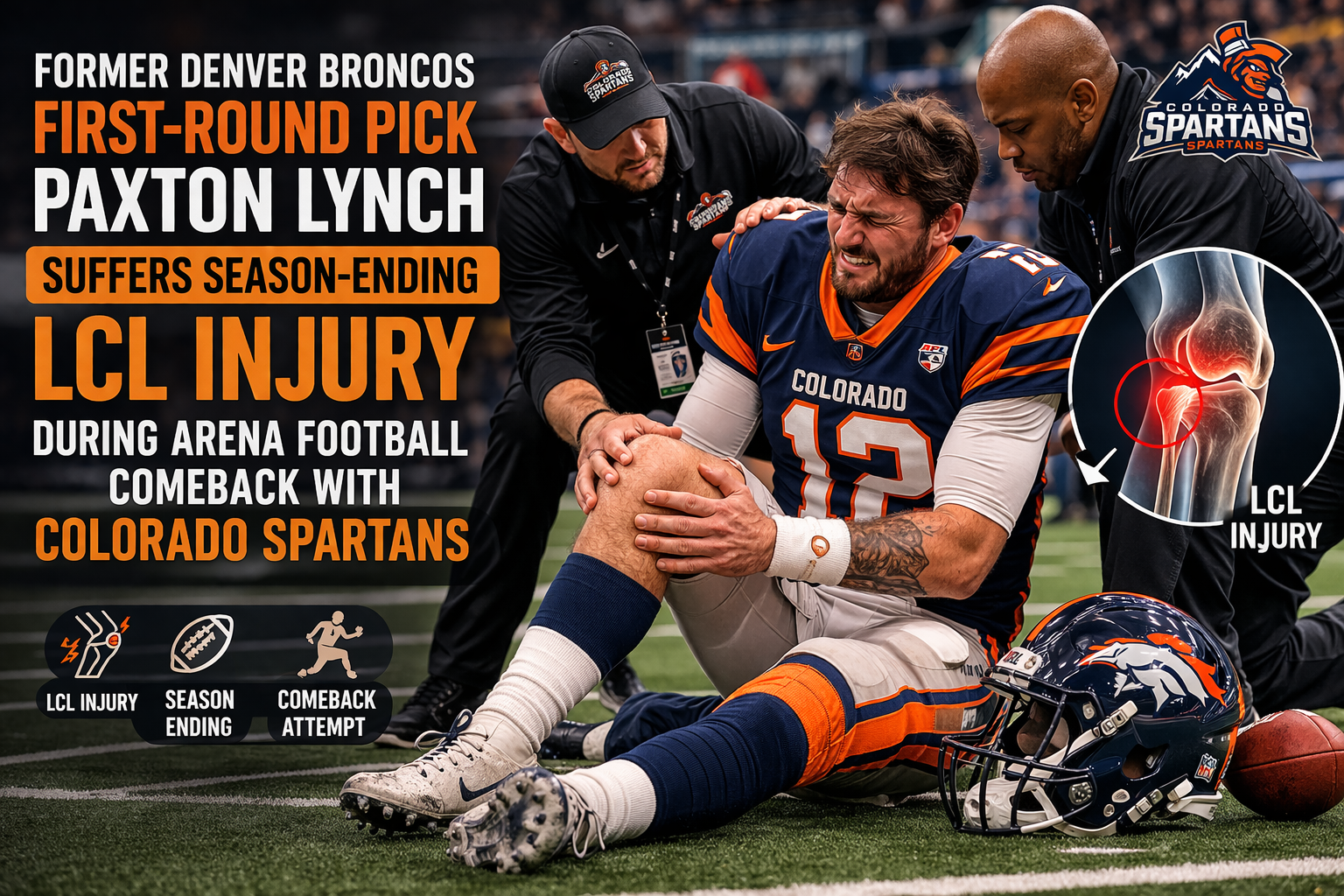
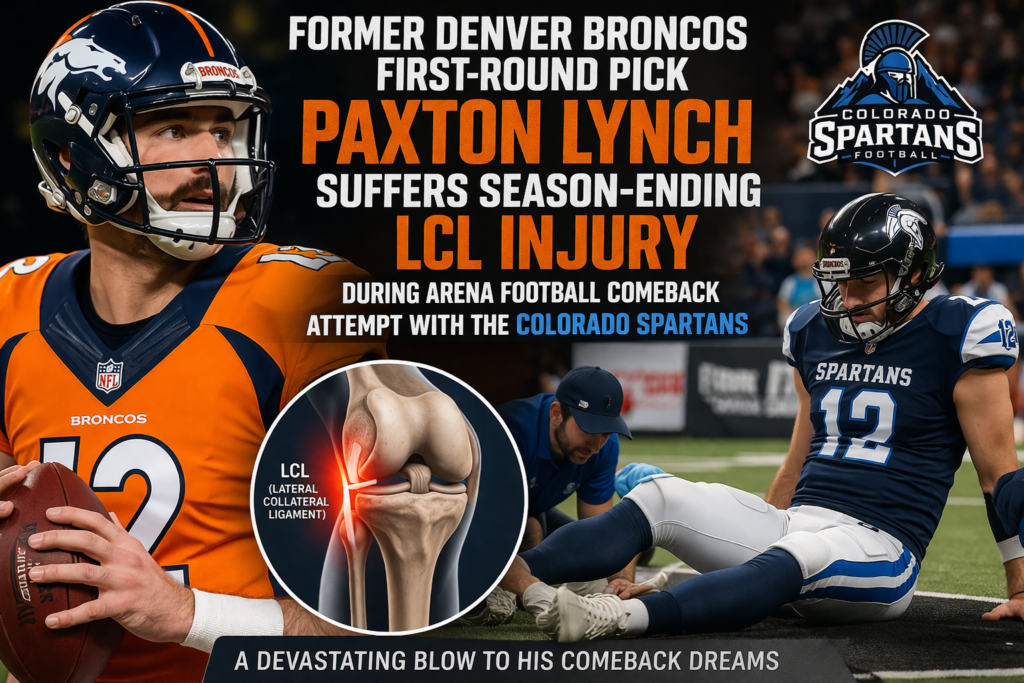
The story of former first-round quarterback Paxton Lynch has taken another dramatic turn after reports confirmed he suffered a serious knee injury during his arena football comeback attempt with the Colorado Spartans.
The incident, widely discussed across sports communities, involves a season-ending LCL injury that abruptly halted what was supposed to be a redemption arc. For many fans, the phrase “former Denver Broncos first round pick Paxton Lynch suffered a season ending LCL injury during an arena football comeback attempt with the Colorado Spartans” has become one of the most searched updates in recent football news.
This article breaks down everything: what happened, how serious the injury is, his career journey, and what could come next for the former NFL quarterback.
Who is Paxton Lynch?
Paxton Lynch was once considered a promising quarterback prospect coming out of college. His size, arm strength, and athletic potential made him an attractive first-round selection.
He was drafted by the Denver Broncos with high expectations that he could become the franchise quarterback of the future. However, his NFL journey did not go as planned.
Despite flashes of talent, consistency issues, injuries, and system adjustments prevented him from securing a long-term starting role. Over time, he moved between teams and practice squads before eventually stepping away from the NFL spotlight.
His recent comeback attempt in arena football was seen as a second chance to revive his professional career.
What Happened During the Colorado Spartans Comeback Attempt?
Lynch joined the Colorado Spartans with hopes of rebuilding his career and proving he still had what it takes to compete at a professional level.
During a recent game in his comeback season, Lynch reportedly landed awkwardly after a scramble outside the pocket. The movement placed immediate stress on his knee, and he was helped off the field by trainers.
Medical evaluation later confirmed a significant LCL injury, officially ending his season.
This moment was especially heartbreaking for fans who were closely following the phrase “former Denver Broncos first round pick Paxton Lynch suffered a season ending LCL injury during an arena football comeback attempt with the Colorado Spartans.”
What is an LCL Injury and Why is it Serious?
The LCL (lateral collateral ligament) is one of the key ligaments in the knee. It helps stabilize the outer part of the joint and controls side-to-side movement.
When an LCL injury occurs, it can range from mild stretching to a complete tear.
Severity Levels:
- Grade 1: Mild sprain, minimal instability
- Grade 2: Partial tear, noticeable weakness
- Grade 3: Complete tear, severe instability
In professional athletes, especially quarterbacks who rely heavily on mobility and pivoting, an LCL injury can significantly affect performance and recovery timelines.
In severe cases, surgery and long rehabilitation are required, which is why Lynch’s injury is being labeled as season-ending.
Why This Injury is a Major Setback
This injury is more than just a physical setback. It represents another difficult chapter in a career already filled with challenges.
For Lynch, the comeback attempt in arena football was supposed to be a fresh start. Instead, the phrase “former Denver Broncos first round pick Paxton Lynch suffered a season ending LCL injury during an arena football comeback attempt with the Colorado Spartans” now defines this phase of his journey.
Key impacts include:
- Loss of a full season of development
- Reduced visibility to scouts and teams
- Increased uncertainty about future playing opportunities
- Mental and emotional challenges after repeated setbacks
Career Journey: From NFL Hope to Arena Football
The journey of Paxton Lynch has been a rollercoaster.
NFL Draft Expectations
He entered the league as a first-round quarterback with high expectations. The Denver Broncos invested in him as a long-term project.
NFL Struggles
However, limited playing time, inconsistent performances, and competition for the starting role slowed his progress.
Transition Phase
After moving between rosters and practice squads, Lynch eventually stepped away from the NFL spotlight.
Arena Football Comeback
His move to the Colorado Spartans was seen as a bold attempt to restart his career and prove his ability at a competitive level.
Key Moments Before the Injury
Before the injury, Lynch had shown glimpses of improved confidence. Reports suggested he was adjusting well to the faster pace of arena football and becoming more comfortable in the offensive system.
Coaches highlighted his leadership in training sessions and his willingness to adapt. Fans began to hope that this comeback could rewrite his football story.
Unfortunately, all momentum stopped with the injury.
Impact on the Colorado Spartans
The loss of their starting quarterback is a major blow for the Colorado Spartans.
Immediate Effects:
- Offensive system disruption
- Backup quarterback promotion
- Reduced playoff chances
Team Adjustments:
The coaching staff now faces the challenge of restructuring the offense mid-season. Arena football requires quick decision-making, and losing a veteran quarterback impacts overall team rhythm.
Recovery Process and Timeline
An LCL injury recovery depends on severity. In Lynch’s case, the season-ending label suggests a moderate to severe grade.
Recovery Steps:
- Initial rest and swelling control
- Physical therapy to restore mobility
- Strength training for knee stability
- Gradual return to throwing mechanics
Timeline:
- Mild cases: 3–6 weeks
- Moderate cases: 6–12 weeks
- Severe cases: 3–6 months or longer
Given the competitive nature of football, full recovery must also include confidence rebuilding.
What This Means for His Football Future
The future for Paxton Lynch is now uncertain.
Possible Scenarios:
1. Full Recovery and Another Comeback
If rehabilitation goes well, he could attempt another season in arena football or similar leagues.
2. Transition Away from Playing
He may consider coaching, mentoring, or quarterback training roles.
3. Retirement from Competitive Football
Repeated injuries and setbacks could push him toward retirement from professional play.
Fan and Media Reaction
The sports world reacted quickly to the news. Many fans expressed disappointment, especially those who were rooting for a redemption arc.
Some analysts pointed out that quarterback development paths can be unpredictable, and injuries often play a major role in career outcomes.
The phrase “former Denver Broncos first round pick Paxton Lynch suffered a season ending LCL injury during an arena football comeback attempt with the Colorado Spartans” quickly trended across sports discussions.
Comparison: NFL Comebacks After Injuries
History shows mixed outcomes for players attempting comebacks after major injuries:
Successful Comebacks:
- Players returning after ACL/LCL recovery with strong rehab programs
- Quarterbacks adapting playing style to reduce mobility stress
Unsuccessful Comebacks:
- Athletes unable to regain pre-injury form
- Repeated injuries limiting long-term performance
Lynch’s case will depend heavily on rehabilitation quality and future opportunities.
Challenges Faced by Former First-Round Picks
Being a first-round quarterback comes with intense expectations.
Common challenges include:
- High pressure from fans and teams
- Limited patience for development
- Media scrutiny
- Injury risks during early career transitions
For Lynch, these pressures have followed him throughout his career.
Future Outlook
The next chapter for Paxton Lynch remains open-ended.
Key factors that will determine his future:
- Recovery speed
- Physical condition post-injury
- Interest from professional teams
- Personal motivation to continue playing
Whether this injury becomes a turning point or the final chapter will depend on his rehabilitation journey.
FAQ Section
What happened to Paxton Lynch during his comeback attempt?
He suffered a serious knee injury during an arena football game, ending his season.
How serious is Paxton Lynch’s LCL injury?
An LCL injury can range from mild to severe; in this case, it was serious enough to end the season.
Will Paxton Lynch return to football?
It depends on recovery progress and future opportunities in professional leagues.
Why did Paxton Lynch join arena football?
He joined to restart his professional football career and prove his abilities.
What teams did Paxton Lynch play for?
He played for the Denver Broncos and later pursued opportunities in alternative leagues.
Is an LCL injury career-threatening?
Not always, but severe cases can significantly impact mobility and performance.
How long is recovery for an LCL injury?
Recovery can range from a few weeks to several months depending on severity.
Could this injury end his career?
It is possible but not confirmed; it depends on recovery and future decisions.
Conclusion
The report that former Denver Broncos first round pick Paxton Lynch suffered a season ending LCL injury during an arena football comeback attempt with the Colorado Spartans adds another difficult chapter to his career story.
From NFL expectations to arena football determination, Lynch’s journey reflects both the unpredictability and physical demands of professional football. While the injury is a setback, the future is still undecided, leaving room for either another comeback or a transition into a new phase of life beyond playing.










Leave a Reply